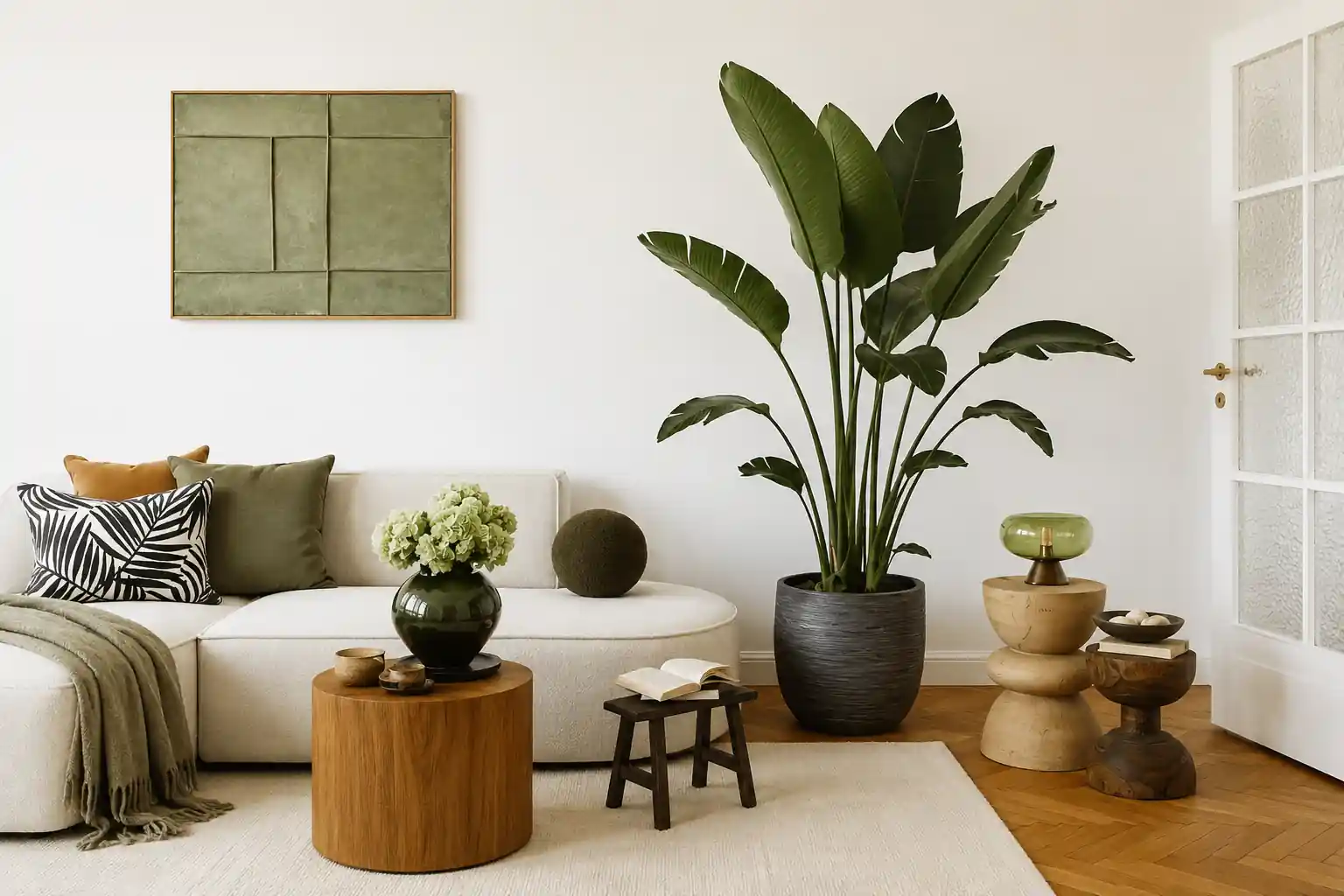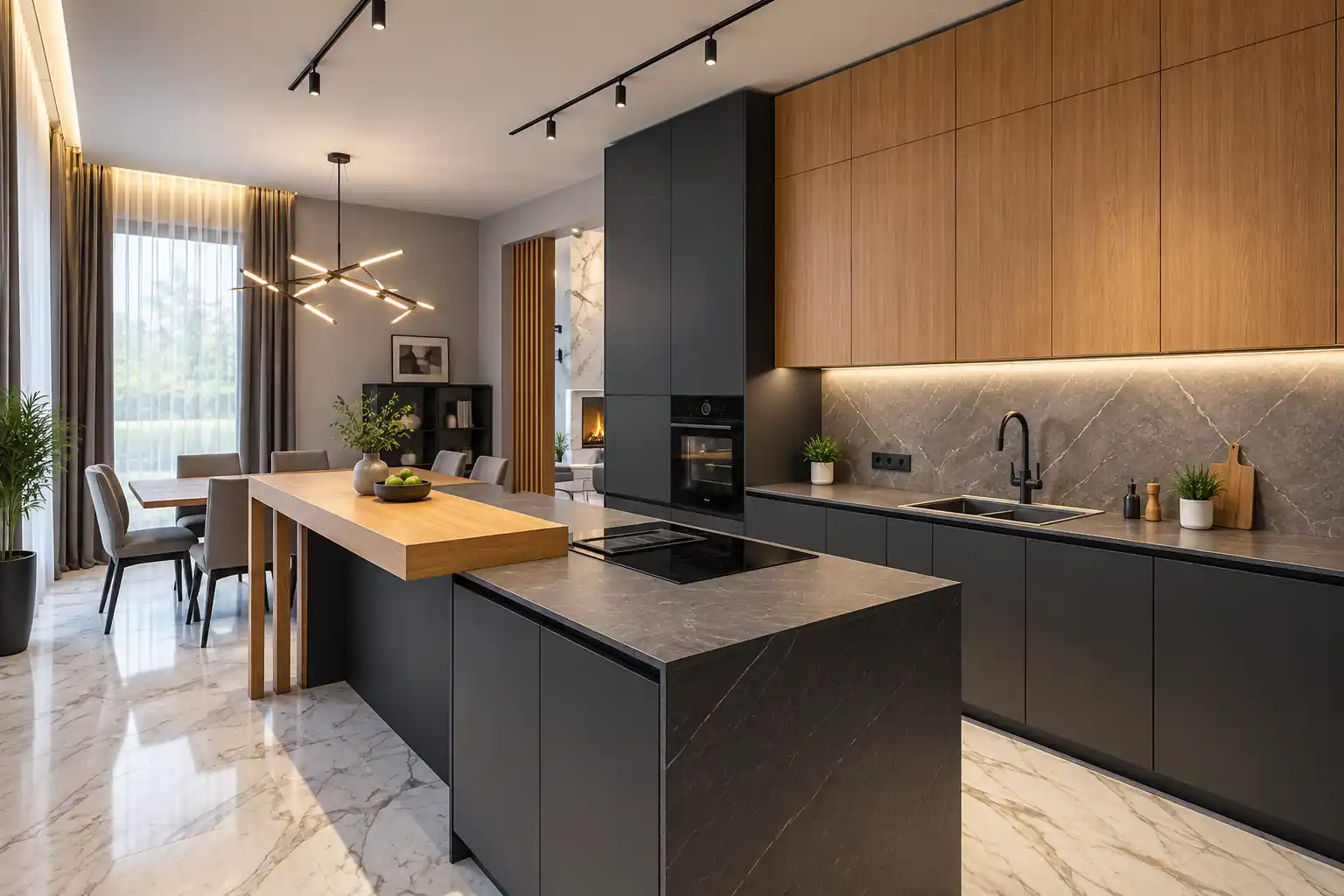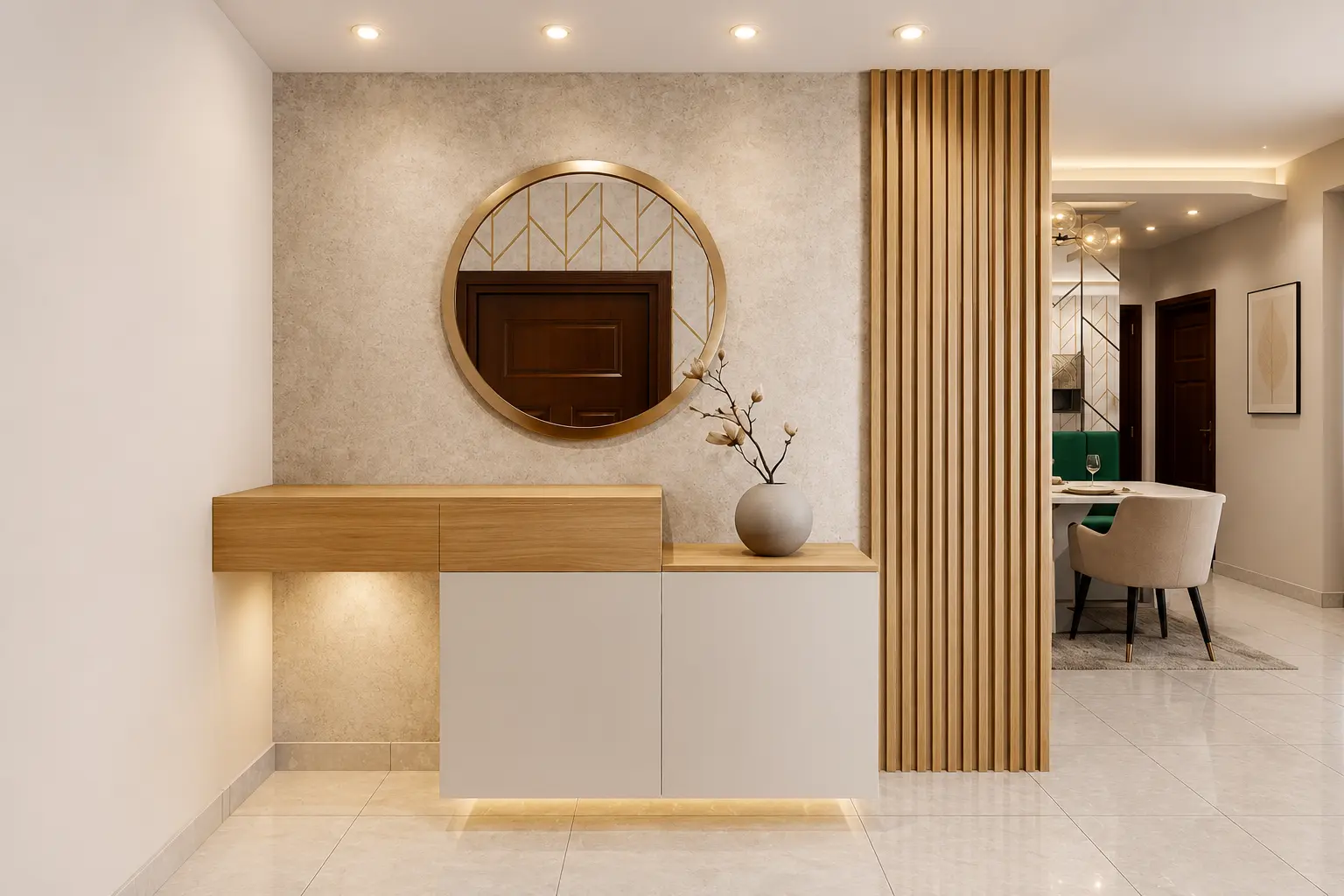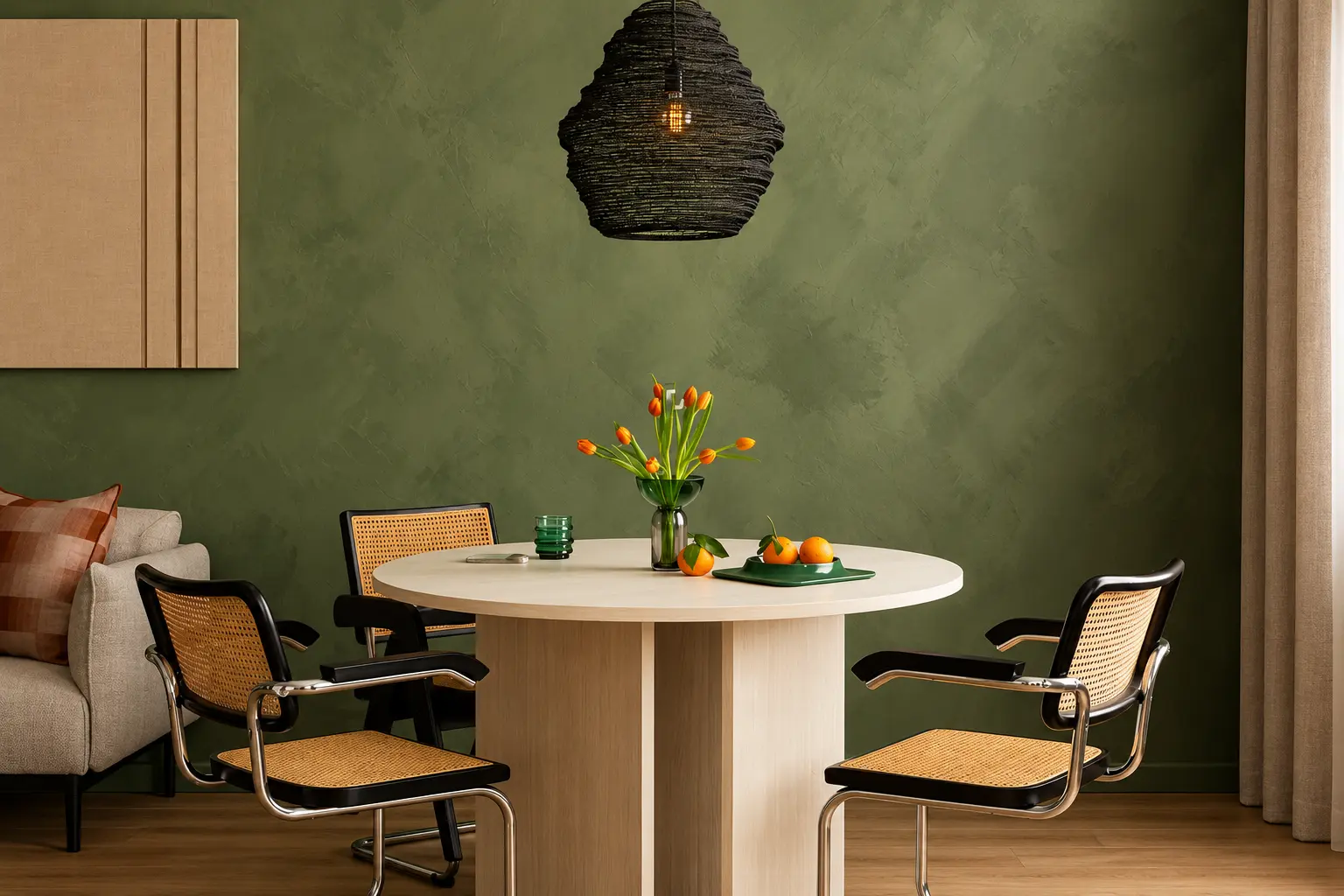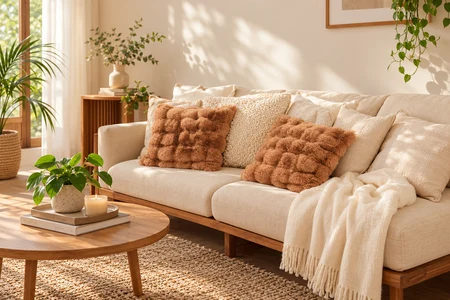
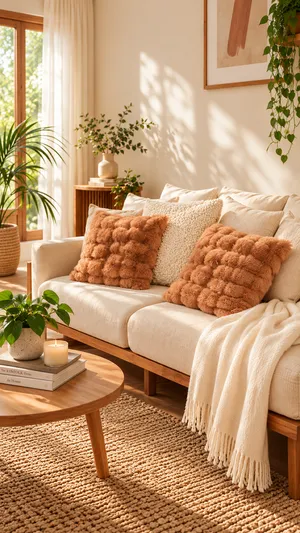



Texture in interior design adds depth, warmth, and visual interest by combining tactile and visual elements such as fabrics, wood, stone, cane, and textured walls. Balancing rough and smooth, matte and reflective, or soft and structured materials helps create a layered yet cohesive space. Thoughtful use of lighting, colour, natural materials, and wall texture can make Indian homes feel richer and more inviting without overwhelming the room.
Your space looks expensive without a designer’s budget when you understand texture in interior design. Layering different materials in the same room creates depth. A space that feels rich and warm has multiple textures working together. Rough against smooth, matte next to reflective, and soft alongside structured, these combinations can truly change how your room feels.
Texture in interior design isn’t just one thing. Texture can be visual or tactile:
In Indian homes, this distinction matters. A wallpaper with embossed patterns gives you visual texture without the maintenance headache of real textured walls. A woven jute rug provides both; it looks interesting and feels rough underfoot. Understanding this nuance in texture in interior design lets you choose what actually works for your home.
Handcrafted pieces carry texture that manufactured goods don’t capture. A clay pot, woven cane panels, and macrame wall hangings aren’t just décor; they also add warmth through material authenticity.
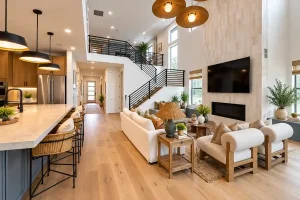
Fabric is your easiest entry point for texture. Rugs, cushions, carpets, and curtains create tactile interest. Hard surfaces everywhere (tile, glass, painted walls) feel cold. Add a jute rug, linen cushions, or heavy curtains so that the room absorbs sound and feels warmer.
Upholstered furniture can do double work, as it can be functional and textural. A velvet sectional reads differently than linen, leather, or tightly woven fabrics. So, make sure your choice matches your room’s intended vibe.
Layering textiles matters more than individual pieces. Using three different textures, such as smooth silk, chunky knit, and rough linen, can create visual movement. In Mumbai apartments where space is tight, fabric texture becomes critical. Interior designers in Mumbai love textured cushions, enthralling curtains, and fabrics on sofas and chairs.
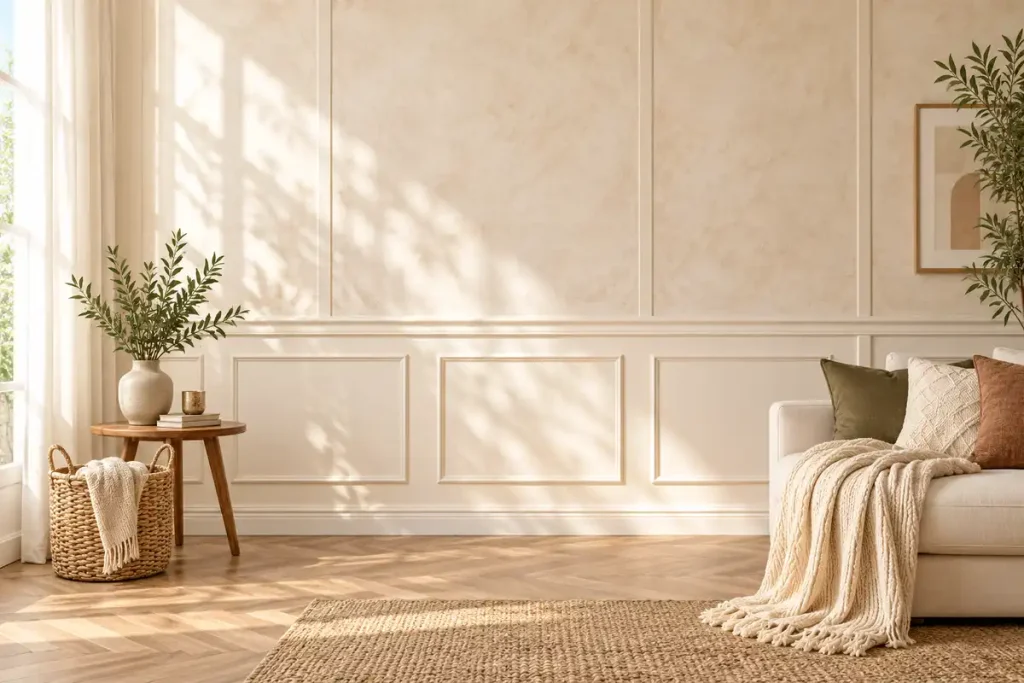
This is where wall texture design gets interesting beyond just paint colour. Wall texture design includes flocking panels, 3D coverings, exposed brick, shiplap, and textured wallpaper. Some are permanent, while others are removable adhesive options.
A single textured wall can create a focal point, but adding texture on all four walls can make the room feel overstimulating. In Bangalore homes with natural light, textured walls catch shadows beautifully throughout the day.
Floors carry texture differently. Polished concrete reads as smooth, a textured rug feels warm, wood has its inherent grain, and mixed flooring materials can create contrast. Each choice has its own pros and cons. Also, make sure your wall-paint texture connects to your floor choice. Rough walls with smooth floors can feel jarring.
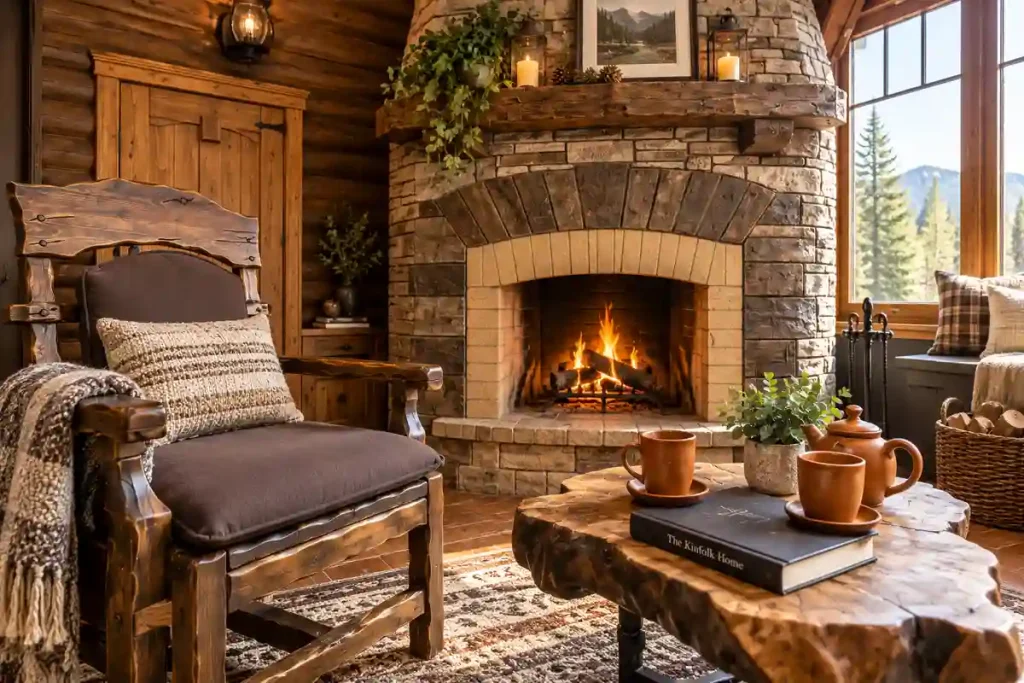
The key is mixing natural materials. Wood plus stone plus woven fibres create layers that feel intentional and rich.
Visual texture in interior design works best when balanced against smooth surfaces. If everything is textured and rough, your eye has nowhere to rest, and the room can feel chaotic. Knowing the principles of texture design for wall painting can help you avoid this trap.
Texture work that feels luxurious requires an understanding of both aesthetic theory and practical execution. Bonito Designs’ LifeDesign philosophy means texture choices are made directly based on your lifestyle, home layout, and aesthetic preferences.
We source authentic materials rather than mass-produced imitations. Real wood versus wood-look laminate feels different. Handwoven textiles versus printed fakes carry different energy. Our ISO-certified quality ensures we choose materials suited to Indian climates.
From design conception through final execution, we layer texture intentionally to make your home feel thoughtful. Need to know more about how texture in interior design can play a role in beautifying your home? Then contact Bonito Designs today!